睽違了許久、世界遺產勝連城腳下的阿麻和利公園、每週六日的曲目終於有更新了。
一樣價錢兩種選擇😂
這次的曲目是「城的祭典」、藉由灶神(火神)引申文化傳承的重要性。
劇中的口號是:よろしく、ゆだしく、がっちんぐすく(yoroshiku、yudashiku、gachingusuku)
よろしく(請多指教)的方言=ゆだしく
がっちんぐすく=勝連城的方言發音。
劇情簡介
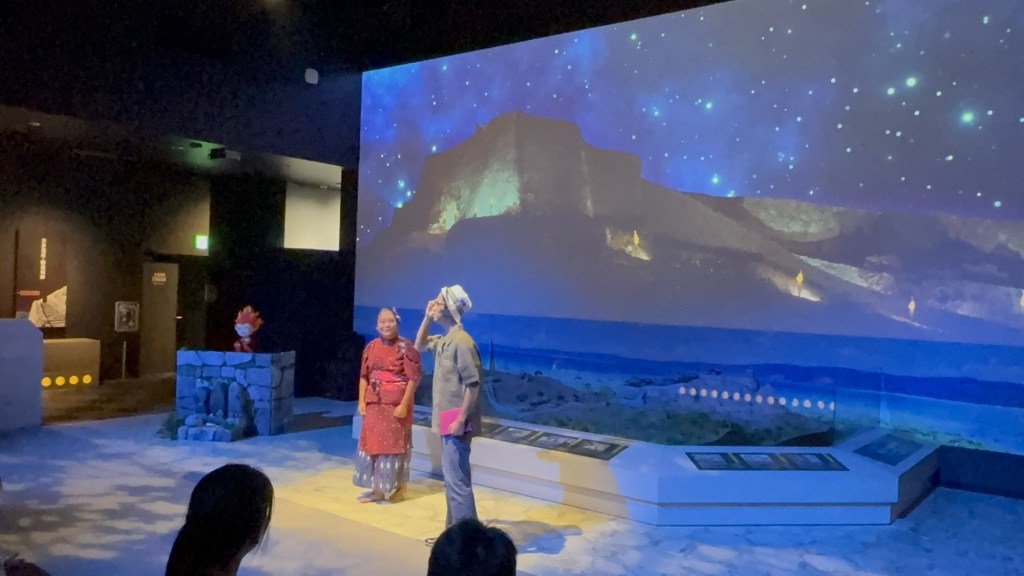
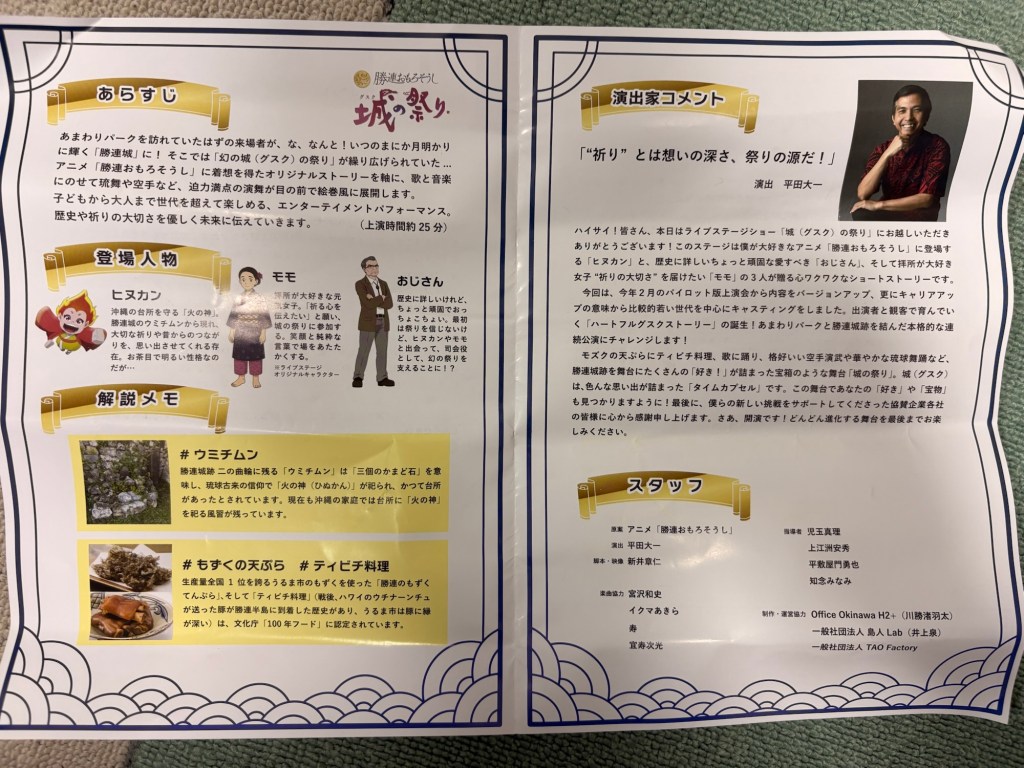
前來參加阿麻和利公園活動的訪客,突然發現自己身處於月光下的勝連城遺跡,在那裡,一場傳說中的「城之祭典(Gusuku Festival)」正在展開。
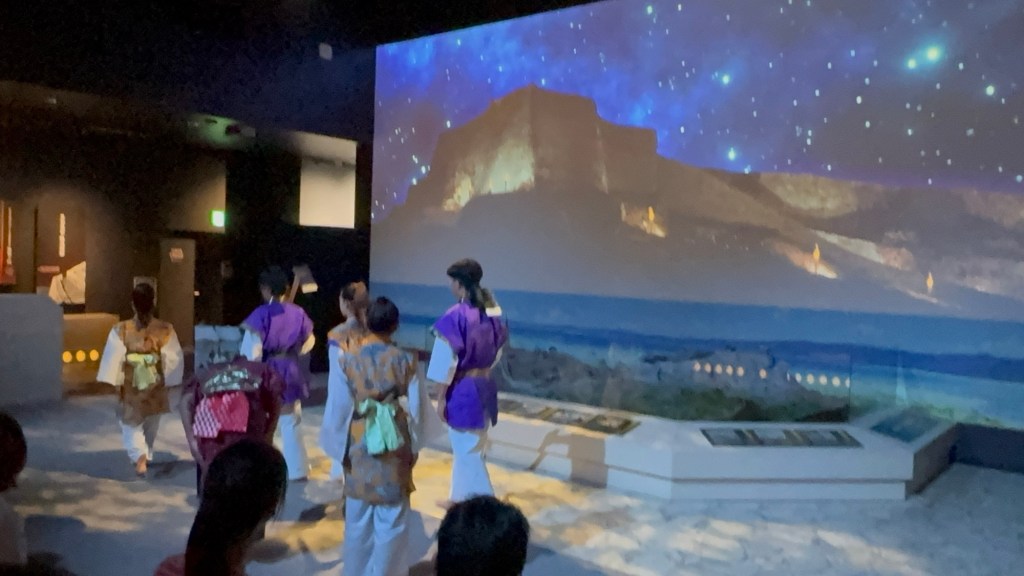
本場舞台劇靈感源自動畫《勝連御物草紙》,融合了琉球舞蹈、空手道、音樂與歌唱,以宛如活生生畫卷的方式搬上舞台。
這是一場適合所有年齡層觀眾欣賞的娛樂性演出,並以溫柔的方式將歷史與祈禱的意義傳遞給未來。
(演出時間:約 25 分鐘)
登場角色
- 火之神(Hinukan)
守護沖繩廚房的火之神。從勝連城的「御三石(Umichimun)」中現身,提醒人們古老的連結與祈禱的重要性。個性活潑調皮,卻充滿智慧。 - 桃(Momo)
一位充滿熱情、喜愛聖地的少女。她懷著傳遞「祈禱意義」的心願,參加城之祭典,其溫暖與真誠照亮整個舞台。 - 歷史迷叔叔(Ojisan)
固執又有些笨拙,卻不失可愛魅力。起初對御城祭持懷疑態度,但在遇見火之神與桃之後,竟意外地成為這場傳奇慶典的主持人。
演出節目流程
- 序幕 – 御三石(Umichimun)
- 開場影片
- 小短劇 1:《邂逅》
歷史叔叔闖入城跡,與桃相遇。突然間,火之神現身。雖然叔叔不相信這場神祕的祭典,但最終被託付為主持人。 - 祝節舞(Iwaibushi) – 琉球舞踊
- 空手道表演
- 小短劇 2:《火之神力量衰退》
隨著人們信仰的消退,火之神虛弱倒下。桃呼籲傳承祈禱的傳統,深深打動了叔叔的心。 - 豆舞(Mamidoma) – 沖繩民俗舞蹈
- 小短劇 3:《流星之夜》
在星空下,歷史叔叔回想起童年時光,並憶起母親對火之神的虔誠。火之神恢復力量,他們一同領悟延續傳統與祈禱精神的重要。 - 終幕舞:《乘風破浪》(Fune Yo Hashire)
- 謝幕 – 「太鼓的響宴」
文化小知識
御三石(Umichimun)
在勝連城的二之郭有三塊爐灶石,被稱為「御三石」,在琉球古代信仰中,這裡供奉著廚房的火之神 Hinukan,象徵著城堡的廚房。直到今天,許多沖繩家庭仍保有在廚房祭拜火之神的傳統。
傳統美食
- 水雲天婦羅(Mozuku Tempura):勝連以其盛產的水雲藻聞名,所在的宇流麻市是日本最大的產地。
- 豬腳(Tebichi):二戰後,夏威夷的沖繩後裔將豬隻送往勝連半島,從此讓宇流麻地區與豬肉文化密切連結。
這兩種料理皆被日本文化廳認定為「100年料理」,代表可持續傳承的地方飲食文化。
雖然、這個曲目還沒有上字幕、不過先了解上面的文章大意、應該就會比較能夠理解
演出者都是國高中生、演技非常精湛、值得到現場觀看。
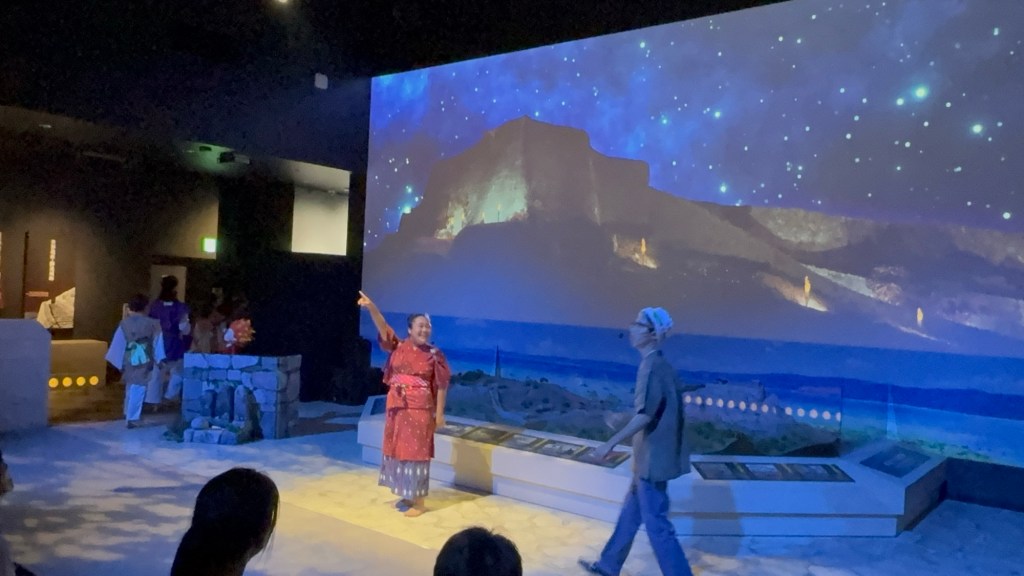
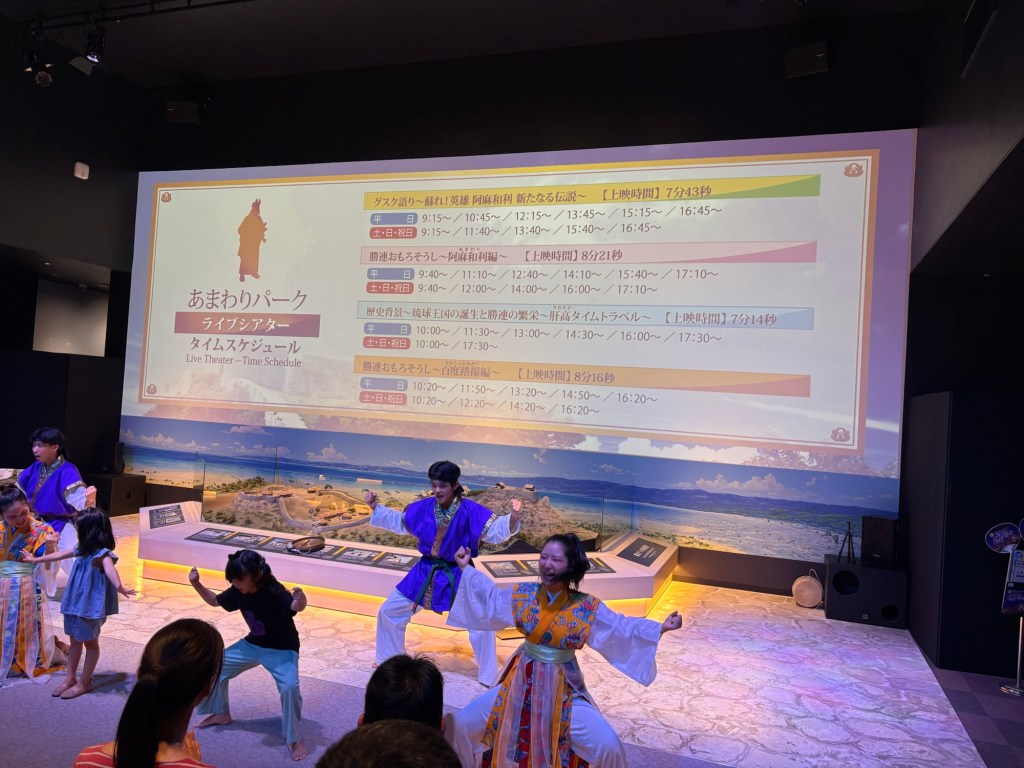
公園的表演曲目表依官網為主:表演曲目
地點:阿麻和利主題公園
地址:沖縄県うるま市勝連南風原3807−2
Katsuren Castle Ruins, World Heritage Site Amawari Park – Live Stage Show Katsuren Omorosoushi The Festival at the Gusuku (Castle) Original Concept: Anime “Katsuren Omorosoushi" Directed by Daiichi Hirata Written by Akihito Arai
Synopsis: Visitors who expect to be at Amawari Park suddenly find themselves under the moonlit sky at Katsuren Castle, where a legendary “Festival of the Gusuku" is unfolding. Inspired by the anime “Katsuren Omorosoushi", this original live performance brings together Ryukyuan dance, karate, music, and song, presented on stage like a living picture scroll.
It is an entertaining show for audiences of all ages, gently passing down the timeless importance of history and prayer to the future. (Running time: approx. 25 minutes) Characters
Hinukan:The fire god who has long protected Okinawan kitchens. Emerging from the Umichimun stones at Katsuren Castle, he reminds people of ancient ties and the value of prayer. Cheerful and playful, yet deeply wise.
Momo:A spirited girl who loves sacred sites. She joins the castle festival with a heartfelt wish to share the meaning of prayer. Her warmth and sincerity light up the stage. The History-Loving Uncle (Ojisan)
A bit stubborn and clumsy, yet full of charm. At first he doubts the festival, but after meeting Hinukan and Momo, he unexpectedly finds himself supporting the legendary celebration as its host.
Performance Program
- Umichimun Stones – Prologue
- Opening Video
- Skit 1 – The Encounter
The History-Loving Uncle wanders into the gusuku and meets Momo. Suddenly, Hinukan, the fire god, appears. Although the uncle doesn’t believe in the mystical festival, he is eventually entrusted with hosting it.
- Iwaibushi – Ryukyuan Dance
- Karate Performance
- Skit 2 – Hinukan’s Strength Fades
As people’s faith declines, Hinukan grows weak and collapses. Momo appeals to the importance of passing on traditions of prayer, moving the uncle’s heart.
•Mamidoma – Okinawa Folk Dance Skit 3- Night of the Shooting Star Beneath the starlit sky, the History-Loving Uncle recalls childhood memories and remembers his mother’s devotion to Hinukan. Strength returns to Hinukan, and together they realize the importance of carrying on tradition and the spirit of prayer.
•Finale Dance – “Fune Yo Hashire" (Sail the ship!)
•Curtain Call – “The Drumming"
Cultural Notes
Umichimun
At Katsuren Castle’s second bailey lie three hearth stones known as Umichimun. In ancient Ryukyuan belief, they enshrined the fire god Hinukan, marking the castle’s kitchen. Even today, many Okinawan households continue the tradition of honoring Hinukan in their kitchens. Traditional Foods Mozuku Tempura: Katsuren is famous for its mozuku seaweed, with Uruma City leading Japan in production. Tibichi (Okinawan stewed pork feet) : After WWII, Okinawan descendants in Hawaii sent pigs to Katsuren Peninsula, linking Uruma deeply with pork culture. Both Mozuku Tempura and Tibichi cuisine have been recognized as “100-Year Foods" by Japan’s Agency for Cultural Affairs.

發表留言